
Hiring global talent has become essential for companies looking to stay competitive in the technology sector. Employers increasingly rely on international professionals to fill skill gaps and support business growth. Understanding different US IT Staffing Visa Types is critical for making informed hiring decisions and ensuring compliance with immigration regulations.
Navigating the complexities of hiring foreign talent requires knowledge of eligibility criteria, documentation, and processing timelines. Employers must carefully evaluate their needs and match them with the appropriate visa category. Whether hiring specialized professionals or transferring employees within an organization, selecting the right visa plays a key role in long-term success.
Additionally, compliance is a major concern. Businesses must follow legal guidelines to avoid delays, penalties, or rejections. Proper planning and expert guidance help streamline the process and reduce risks associated with international hiring.
By understanding US IT Staffing Visa Types, employers can create a structured hiring strategy that supports growth, innovation, and workforce diversity.
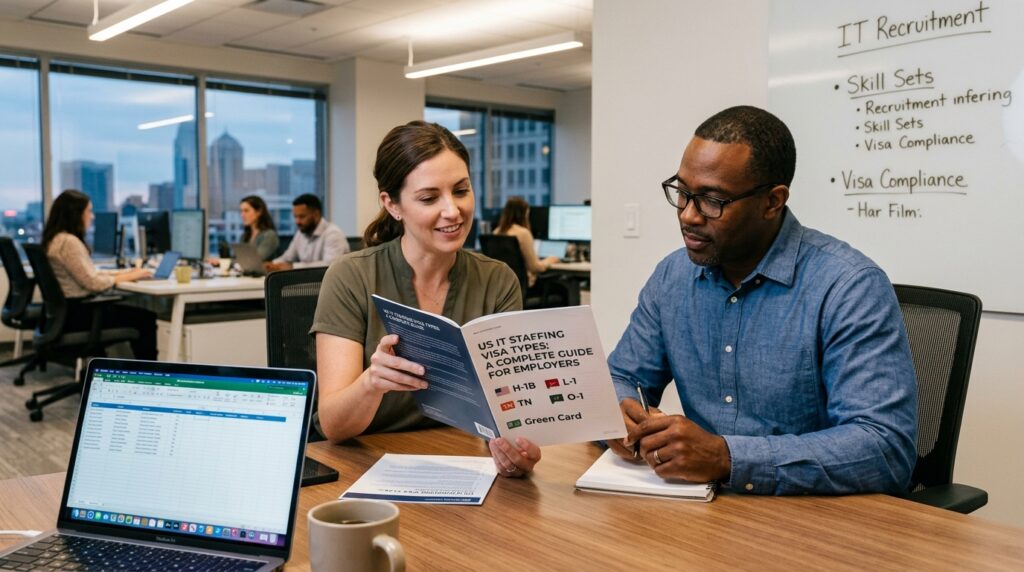
Understanding US IT Staffing Visa Types for Employers
For companies expanding their workforce, understanding US IT Staffing Visa Types is essential. These visa categories provide pathways to hire skilled professionals from around the world while maintaining compliance with immigration laws.
One of the most commonly used options is the H1B visa, which allows employers to hire foreign professionals in specialty occupations. This visa is particularly popular in the IT sector, where technical expertise is in high demand. Companies must meet specific requirements, including offering competitive wages and filing petitions within designated timelines.
Another important option is the L1 visa, which enables organizations to transfer employees from international offices to the United States. This visa is ideal for multinational companies that want to move managers, executives, or specialized employees across locations.
In addition to these options, there are various US work visas available depending on the role, duration, and qualifications of the employee. Employers must evaluate each option carefully to determine the best fit for their hiring needs.
By leveraging the right US IT Staffing Visa Types, businesses can access global talent, improve operational efficiency, and maintain a competitive edge in the industry.
H1B Visa: Key Requirements and Benefits for IT Staffing
The H1B visa is one of the most widely used visa categories for hiring skilled professionals in the technology sector. It allows companies to employ foreign workers in specialized roles that require technical expertise.
To qualify for the H1B visa, candidates must have relevant educational qualifications and experience. Employers must also demonstrate that the role requires specialized knowledge and meets industry standards. The application process involves filing petitions, obtaining labor condition approvals, and meeting strict deadlines.
One of the key benefits of the H1B visa is its flexibility. It allows professionals to work in various IT roles, from software development to data analysis. This makes it a valuable option for companies looking to fill critical positions quickly.
Additionally, the visa provides opportunities for long-term employment, enabling businesses to retain skilled professionals and build a stable workforce. Employers can also extend the visa under certain conditions, ensuring continuity in operations.
By understanding how the H1B visa fits within broader US IT Staffing Visa Types, companies can make informed decisions and maximize the benefits of hiring international talent.
L1 Visa: A Strategic Option for Global Workforce Mobility
The L1 visa is designed for companies that operate internationally and need to transfer employees to the United States. This visa supports internal mobility and allows organizations to leverage existing talent across different locations.
There are two main categories under the L1 visa: one for executives and managers, and another for employees with specialized knowledge. This flexibility makes it a valuable tool for businesses seeking to strengthen their operations and maintain consistency across global offices.
The application process for the L1 visa requires proof of a qualifying relationship between the company’s international and US offices. Employers must also demonstrate that the employee has been working with the organization for a specified period before the transfer.
One of the major advantages of the L1 visa is that it enables companies to bring experienced employees who are already familiar with their processes and culture. This reduces onboarding time and ensures smoother transitions.
When combined with other US IT Staffing Visa Types, the L1 visa offers a strategic solution for managing a global workforce and supporting business expansion.
Choosing the Right US Work Visas for Your Business Needs
Selecting the appropriate US work visas is a critical step for employers aiming to hire international talent. Each visa type has unique requirements, benefits, and limitations, making it important to align the choice with business objectives.
Employers must consider factors such as job roles, duration of employment, and employee qualifications. While the H1B visa is ideal for specialized roles, the L1 visa works best for internal transfers within multinational organizations.
In addition to these, various other US work visas may be suitable depending on specific circumstances. Understanding these options helps businesses create flexible hiring strategies that accommodate different needs.
Proper documentation and compliance are essential when applying for US work visas. Employers must ensure that all requirements are met to avoid delays or rejections. Working with experienced professionals can simplify the process and improve success rates.
By evaluating all available options within US IT Staffing Visa Types, companies can select the most suitable visa category and build a strong, diverse workforce that supports long-term growth.
Common Mistakes Employers Should Avoid When Hiring International Talent
Hiring global professionals can unlock growth opportunities, but mistakes in the process can lead to delays, compliance issues, and even application rejections. Understanding how US IT Staffing Visa Types function is essential for avoiding these pitfalls and ensuring a smooth hiring experience.
One common mistake is selecting the wrong visa category without fully evaluating the role requirements or candidate qualifications. Employers often rush decisions without considering long-term needs, which can result in unnecessary complications. Taking the time to assess all available US IT Staffing Visa Types helps businesses choose the most suitable option for both short-term and long-term goals.
Another frequent issue is incomplete or inaccurate documentation. Even minor errors in paperwork can lead to delays or denials, impacting project timelines and business operations. Employers should ensure that all forms, supporting documents, and compliance requirements are carefully reviewed before submission.
Additionally, many companies underestimate the importance of staying updated with immigration policies. Regulations related to US work visas can change frequently, and failing to keep up can result in non-compliance or missed opportunities. Partnering with experienced professionals or legal experts can help mitigate these risks and streamline the hiring process.
By avoiding these common mistakes, employers can build a more efficient hiring strategy, reduce risks, and successfully bring in skilled international talent to support their business growth.
Conclusion
Hiring international talent is no longer just an option, it’s a strategic necessity for businesses aiming to stay competitive in a fast-evolving market. By understanding the processes, requirements, and long-term implications of global hiring, employers can make smarter decisions that align with their organizational goals.
A well-planned approach ensures smoother onboarding, better compliance, and stronger team integration. It also allows companies to tap into diverse perspectives, which often leads to increased innovation and improved problem-solving within teams.
Success in global hiring comes from preparation, attention to detail, and a willingness to adapt to changing regulations and market demands. Employers who invest time in building a structured hiring strategy are more likely to experience consistent growth and operational efficiency.
Ultimately, creating a workforce that blends local and international expertise can drive long-term success, strengthen business capabilities, and position organizations for sustained expansion in a global economy.
1. What are the key differences between H1B and L1 visas for hiring IT professionals?
The H1B visa is designed for specialized workers in roles requiring technical expertise, such as software developers or data analysts, with a focus on specific qualifications. The L1 visa, on the other hand, allows international companies to transfer employees, such as managers or executives, from their global offices to the US. Understanding these distinctions helps employers choose the right visa type based on job requirements and organizational needs.
2. How do I determine which US IT Staffing visa is right for my business?
Choosing the right visa depends on several factors, including the role, the qualifications of the candidate, and the nature of your business. The H1B visa works well for hiring professionals with specialized knowledge, while the L1 visa is ideal for transferring existing employees within a multinational company. Evaluate your company’s long-term goals and the skills required for each role to make the best choice.
3. Can I hire foreign IT professionals without an H1B or L1 visa?
Yes, while the H1B and L1 visas are popular for hiring skilled international talent, other options may be available depending on the role and duration of employment. The O-1 visa (for individuals with extraordinary skills) or TN visa (for qualified Canadians and Mexicans) could be viable alternatives for certain job categories. Always consult with an immigration expert to explore all available visa options.
4. How can my company ensure compliance with US immigration laws when hiring international IT talent?
Ensuring compliance requires understanding the visa requirements and documentation for each visa type. Employers must submit accurate and timely petitions, meet wage requirements, and avoid discrepancies in documentation. It’s crucial to stay updated on regulatory changes and work closely with immigration attorneys or HR specialists to navigate the complex process and minimize the risk of delays or penalties.