
By the Innovyt Team · Last updated October 2026
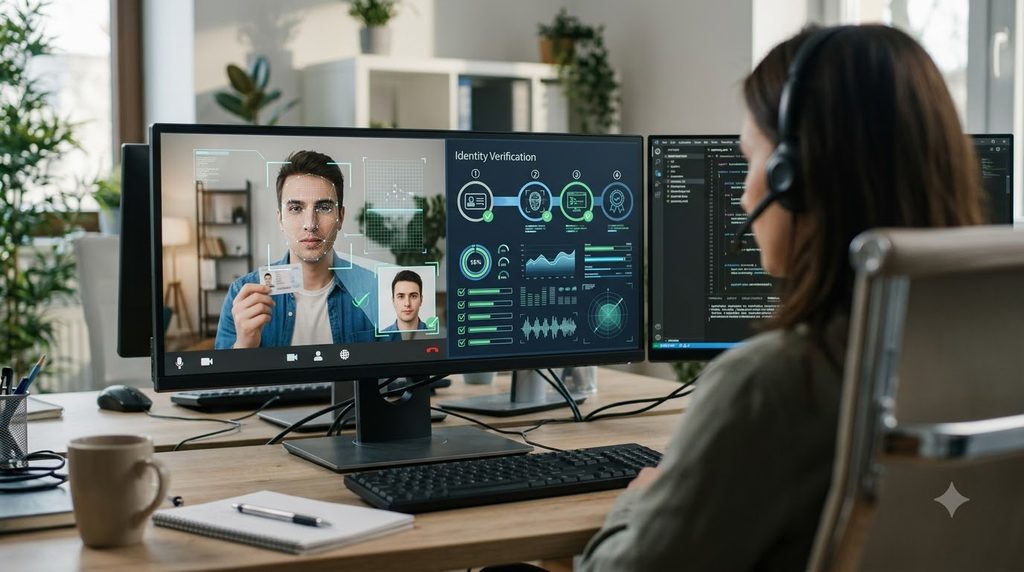
To verify a remote IT candidate, confirm four things before giving system access: their identity, their technical skills, their work history, and that onboarding limits what they can reach. A resume and one video interview cannot confirm any of these on their own. Proxy interviews, AI-assisted answers and deepfake video all target the gaps between hiring stages, so verification has to run through the whole process, not just one step.
The core question in remote hiring is simple: is the person you interviewed the same person who will do the work? This guide covers the common types of remote IT hiring fraud, the warning signs to watch for, and a step-by-step verification process your hiring team can use.
Quick verification checklist
| What to verify | The question it answers | How to check |
| Identity | Is this the same person at every stage? | Government ID, document verification, identity matching across stages |
| Technical skills | Can they actually do the work? | Live coding, troubleshooting scenarios, real project simulations |
| Experience | Are their claims accurate? | Employer, certification, education and reference checks |
| Interview integrity | Did they complete assessments on their own? | Live problem-solving, follow-up questions on earlier answers |
| System security | Is company data protected after hiring? | Role-based permissions, controlled access, security training |
Why is remote IT hiring fraud increasing?
Remote hiring removed the steps that used to confirm identity by default: office visits, face-to-face interviews, physical ID checks and in-person interaction. Today a candidate can go from resume to offer letter to onboarding without ever meeting anyone. That speeds up recruitment, but it also means a company may not know who the candidate really is, whether their credentials are genuine, or whether they completed assessments on their own.
The numbers show how fast this is growing. Research firm Gartner predicts that by 2028, 1 in 4 candidate profiles worldwide could be fake. In a Gartner survey of 3,000 job candidates, 6% admitted to interview fraud, either posing as someone else or having someone else pose as them, and about 4 in 10 said they use AI during the application process (HR Dive).
The risk is not only a bad hire. The FBI, State Department and Treasury have warned since 2022 that thousands of North Korean IT workers use false identities to win remote software and development contracts, and that companies paying them can face legal consequences for sanctions violations. In some cases, these workers have also stolen data from the companies that hired them (NBC News / AP).
What the FBI recommends for remote IT hiring
FBI guidance for employers hiring remote IT workers includes these practical checks (summary via KnowBe4):
- Examine identity documents closely for misspellings and errors
- Verify employment and education history by contacting former employers or schools directly
- Meet in person where possible; on video, require the camera on with an unobscured background
- Ask questions about the candidate’s claimed location and the location on their ID
- Capture images during interviews to compare against later meetings
What are the most common types of remote IT hiring fraud?
| Fraud type | What happens | Warning signs |
| Proxy interview | Someone else takes the interview or assessment for the real candidate | Different communication style later; can’t explain earlier answers; avoids live problem-solving |
| Fake technical candidate | The resume overstates programming, cloud or framework experience, or previous projects | Advanced experience listed but basic concepts unclear |
| AI-assisted interview fraud | The candidate uses generated answers, coding assistance or outside help during assessments | Strong written answers but weak live discussion |
| Deepfake interview | Video is used to appear as someone else on camera | Identity can’t be matched across stages; video alone is the only proof of identity |
A video call confirms that someone appears on camera. It does not confirm their true identity, background or technical ability.
How can you spot a fake IT candidate before hiring?
Not every inconsistency means fraud. The goal is a process where genuine candidates can easily prove their skills and dishonest ones can’t hide. Look for these signs:
- Resume claims they can’t explain. Ask about their specific contribution, the technical decisions they made and the problems they solved. Real experience comes with practical detail.
- Skill level that doesn’t match across stages. Compare resume claims, interview answers and assessment results. Strong written answers paired with weak live discussion is a common red flag.
- Avoiding live technical work. Someone who understands their work can usually explain their approach in a live coding or troubleshooting session.
- Sudden changes in communication. Different writing style, speaking pattern or behavior between stages may signal that a different person is involved. Treat it as a reason for extra verification, not proof.
How to verify a remote IT candidate: 4 steps
Verification should start before the first assessment and continue after the offer. Each step answers a different question.
Step 1: Verify identity before the technical round
Answers: Is this the right person?
Confirm government identification and personal details through document verification and identity matching before the candidate receives assessments, internal information or system access. Then check that the same person appears at every stage: screening call, technical interview, final round and onboarding. Live identity confirmation at the start of each video interview closes the gap that proxy and deepfake fraud depend on.
Step 2: Test skills live, not just on paper
Answers: Can this person do the work?
Take-home tests and written answers are the easiest stages to outsource or complete with AI help. Put the weight on live evaluation:
- Live coding with the candidate explaining their thinking
- Architecture challenges and troubleshooting scenarios
- Real project simulations tied to the actual role
- Follow-up questions on answers they gave in earlier rounds
Step 3: Validate work history and credentials
Answers: Is their experience real?
Verify previous employers, responsibilities, certifications, education and references. Background checks replace claims with confirmed information before the hiring decision is final.
Step 4: Onboard with controlled access
Answers: Is the company protected if something was missed?
Create accounts securely, give role-based permissions, and grant only the access the role needs. Add security training during onboarding. If any earlier step failed, controlled access limits the damage.
Traditional vs verified remote hiring
| Traditional approach | Verified approach |
| Resume-focused | Identity + skill validation |
| Depends on the interview | Multiple evaluation layers |
| Limited verification | Background checks |
| Full access after hiring | Controlled, role-based onboarding |
Which tools support remote hiring verification?
Tools support the decision; they don’t replace human evaluation.
- Digital identity verification: document verification, identity matching and authentication checks
- Video interview authentication: live identity confirmation and consistency checks across interviews
- Technical assessment platforms: coding, problem-solving and practical decision-making tests
- Background verification: employment history, education, certifications and references
How to keep verification fair for genuine candidates
Extra steps should not create unnecessary friction. Tell candidates upfront which checks happen and why; a transparent, consistent process protects honest applicants by removing the advantage dishonest ones get. Write the process down: which roles need verification, when checks happen, who reviews results, and what happens if something doesn’t match.
Identity data is sensitive, so store it securely, limit who can access it, and follow applicable privacy requirements. Train recruiters and hiring managers to recognize inconsistencies and unrealistic technical claims, and review the process regularly as fraud methods change.
How Innovyt helps companies hire verified remote IT talent
Innovyt is a US-based staffing company that provides permanent staffing, contract staffing, contract-to-hire and offshore staffing for IT roles. Innovyt’s recruiters source and screen candidates for technical ability, experience, communication and fit with the client’s business needs, using an in-house talent database and proprietary assessment tools. Every client works with a dedicated account manager.
If you hire through a staffing partner, ask how they verify candidates
FBI guidance specifically notes that contract IT work is a common route fraudulent workers use to get hired, and advises companies to share verification guidance with any third-party firm that supplies their IT contractors. Before you accept a submitted candidate, ask your staffing partner:
- How is the candidate’s identity confirmed, and at which stage?
- Is the person you interview the same person who will start the job, and how is that checked?
- Are technical skills tested live, or only through take-home tests?
- Are past employers and references contacted directly?
- What happens if a mismatch is found after placement?
If you’re hiring remote IT talent through Innovyt, bring these questions to your account manager so the screening plan matches your role’s risk level.
Frequently asked questions
What is remote hiring identity verification? It is the process of confirming that a remote candidate is who they claim to be throughout recruitment, using identity checks, document verification, interview verification and background validation.
Why does identity verification matter more for IT roles? IT professionals often get access to company systems, source code, customer information and technical infrastructure. A fake or proxy hire can mean unauthorized access, not just a bad hire.
Are video interviews enough to verify a remote candidate? No. A video call shows that someone is on camera; it doesn’t confirm their identity, background or skills. Combine it with identity verification, live technical assessment and background checks.
What is a proxy interview? A proxy interview is when another person takes the interview or technical assessment on behalf of the real candidate, so the company evaluates one person and hires another.
Can AI create risks in remote hiring? Yes. Candidates can misuse AI for generated interview answers, help during assessments or misleading digital identities. Live, scenario-based evaluation makes this much harder.
What is the best way to prevent remote hiring fraud? A layered process: verify identity first, test skills live, validate experience, and onboard with controlled access. No single step removes every risk, but together they make fraud far harder.
Hire remote IT talent with confidence
The goal of remote hiring is not just filling a position; it is knowing that the person you hired is the person doing the work. If you are hiring remote developers or IT specialists, talk to Innovyt about building a screening process that verifies identity, skills and experience before day one.
Talk to Innovyt’s IT staffing team →